
What Causes Moss to Grow on Roof Shingles in Vancouver WA?
- Brandon Hartz
- Aug 3
- 5 min read

What Causes Moss to Grow on Roof Shingles in Vancouver WA?
If you live in Vancouver WA or anywhere in Clark County, you’ve almost certainly looked up at your roof and wondered why moss seems to grow so aggressively here. It’s not just a little green here and there — in a lot of neighborhoods it turns into thick, carpet-like patches that spread year after year.
I’ve been cleaning roofs in this area since 2020 (ProSoaks since 2022), and I see the same pattern over and over. Homes that look fine from the street often have heavy moss on the north and east sides once you get up close. Understanding why it grows so well here is the first step to keeping it under control.

The Perfect Storm for Moss Growth in Vancouver WA
Moss needs three main things to thrive: moisture, shade, and something to hold onto. Vancouver WA and the surrounding Clark County areas deliver all three in abundance for most of the year.
1. Constant Moisture Our long, wet winters are the biggest driver. From October through April, roofs stay damp for weeks at a time. Even when it’s not actively raining, the high humidity and frequent cloud cover keep surfaces wet. Moss loves these conditions because it doesn’t dry out the way it would in a hotter, sunnier climate. Once a small patch gets established, the constant moisture lets it keep expanding.
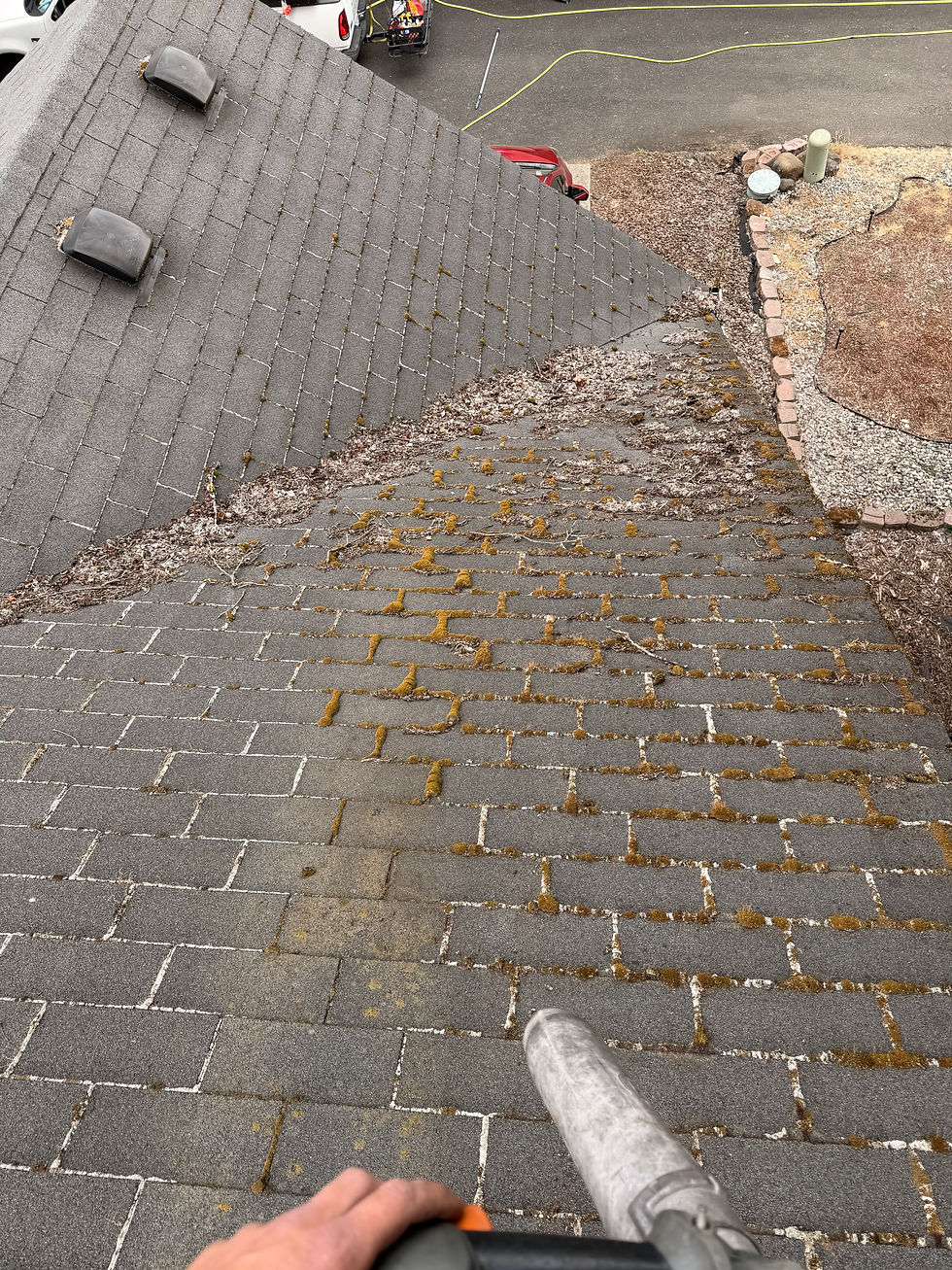
2. Shade from Trees Big firs, maples, and other trees are everywhere in neighborhoods like Salmon Creek, Felida, Orchards, Hazel Dell, and Battle Ground. When trees block direct sunlight, the roof stays wet much longer after rain. The shaded sections (usually the north and east sides) are almost always where moss shows up first and grows thickest. Even a few hours less sun each day makes a big difference in how fast moss can take hold.
3. Debris That Traps Water Pine needles, leaves, pollen, and small twigs collect on roofs and in the valleys. This debris acts like a sponge. It holds moisture against the shingles long after the rain has stopped. Over time, that trapped moisture creates the perfect micro-environment for moss to root and spread. Homes with heavy tree cover almost always have more debris buildup and, as a result, more aggressive moss growth.
4. Mild Temperatures Moss doesn’t need extreme heat or cold. Our mild Pacific Northwest temperatures allow it to grow almost year-round. It slows down a bit in the coldest months, but it rarely goes fully dormant the way it might in climates with hard freezes or intense summer heat.
Why Asphalt Shingles Are Especially Vulnerable
Most homes in Vancouver WA have asphalt shingle roofs, and these are particularly good at supporting moss. Asphalt shingles have a textured surface that gives moss something to grip. They also contain limestone fillers that moss can feed on. Once a small colony gets started, it spreads outward by trapping more moisture and debris, which creates even better conditions for new growth.
I’ve cleaned hundreds of asphalt roofs in this area. The pattern is consistent: the shaded, debris-heavy sections grow moss first, and if left alone, it slowly moves across more of the roof surface.
How Moss Actually Spreads Once It Starts
Moss doesn’t just sit there looking green. As it grows thicker, it holds more water against the shingles. That constant moisture starts breaking down the protective granules on the shingles. Over time, the moss roots can lift the edges of the shingles slightly, allowing water to get underneath. This is why older, heavily mossed roofs often show more granule loss in the gutters and, in advanced cases, soft spots in the decking.
The longer the moss stays, the more damage it can do. What starts as a cosmetic issue can turn into a real maintenance problem if it’s ignored for several years.
Real Local Example
A homeowner in Felida called me after noticing thick green patches on the north side of his roof. From the ground it didn’t look extreme, but once I got up there the moss was several inches thick in places and the shingles underneath were staying wet for days after every rain. We soft washed the entire roof, focusing extra attention on the shaded sections. The homeowner also trimmed back a few overhanging branches. Two years later the moss growth has been dramatically slower, and the roof is in much better shape than it would have been if he’d waited.
I see similar situations regularly in Salmon Creek, Orchards, and other tree-heavy neighborhoods. The combination of shade + moisture + debris is extremely effective at growing moss here.

What You Can Do About It
Understanding the causes points directly to the solutions:
Reduce shade where possible by trimming overhanging branches
Keep gutters clean so water drains properly and debris doesn’t back up onto the roof
Address moss early with professional low-pressure soft washing before it gets thick
Stay on a regular maintenance schedule (most homes in this climate benefit from cleaning every 1–3 years depending on tree cover)
Waiting until the moss is thick and dark usually means more work and higher cost later. Early action is almost always cheaper and more effective.
Why Soft Washing Is the Right Approach
High-pressure washing can damage shingles and force water underneath them. Low-pressure soft washing uses the right cleaners at low pressure to kill the moss at the root without harming the roof surface. This is the method we use on every roof we clean. When done correctly, it removes the existing growth and helps slow new growth, especially when combined with basic prevention steps like gutter cleaning and branch trimming.
We back every soft wash with our 3-year moss-free guarantee. That means if moss returns within three years under normal conditions, we come back and take care of it.
Final Thoughts
Moss grows so well on roofs in Vancouver WA because our climate gives it almost everything it needs: long periods of moisture, plenty of shade, mild temperatures, and surfaces that hold debris. Once you understand those factors, the prevention and treatment steps become much clearer.
If your roof is starting to show green patches, or if it’s been a few years since it was last cleaned, the best next step is a professional inspection. Text or call ProSoaks at (360) 975-1102. I’ll come take a free look at your roof, explain exactly what’s driving the growth on your specific home, and give you honest recommendations — no pressure.
We treat every home like family and every roof better than our own.
Last updated: August 2026 ProSoaks – Vancouver WA roof cleaning and soft washing experts. Damage-free guarantee and 3-year moss-free warranty since 2022. Vancouver WA first, Portland OR too.


Comments